

What Are the Signs That an ATC Cam Box Worm Wheel Needs Replacement?
Introduction
Abnormal noise, increased backlash, positioning deviation, vibration, repeated tool-change alarms, and visible tooth damage are common warning signs of wear inside an ATC cam box. When these symptoms begin to appear, the worm wheel should be included in the inspection before the problem develops into tool-change failure or unexpected machine downtime.
However, these symptoms do not always mean that the worm wheel must be replaced immediately. Insufficient lubrication, improper alignment, bearing wear, excessive tool weight, or sensor-related issues may cause similar problems. A complete inspection is therefore necessary to identify the actual source of the fault.
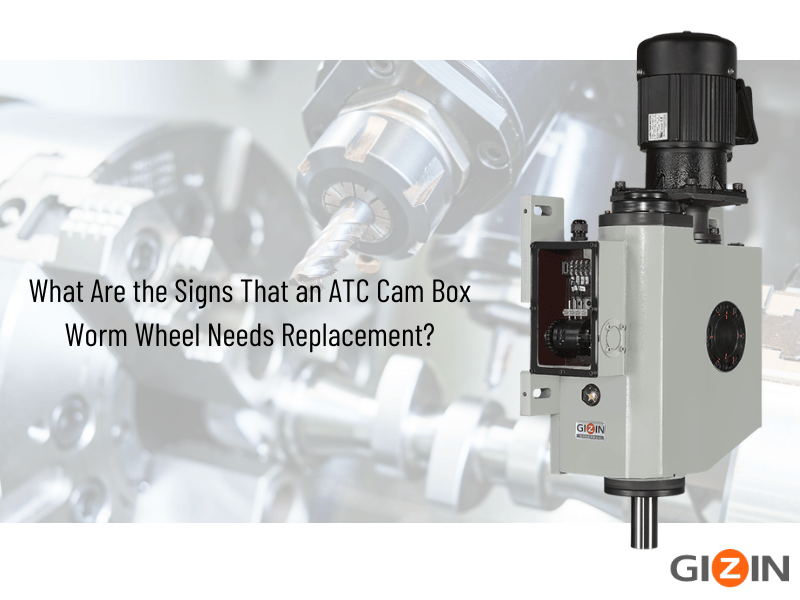
Inside an ATC cam box, the worm wheel transfers power from the worm gear to the output shaft and supports the synchronized movement of the tool-changing mechanism. This article explains six warning signs of worm wheel wear, the factors that accelerate damage, and when replacement should be considered.
Why Is the Worm Wheel Important in an ATC Cam Box?
In many ATC cam box systems, the worm gear drives the worm wheel, which then transfers power to the output shaft. This mechanism controls several key movements in the tool change sequence, including:
- ● Tool changer arm movement
- ● Output shaft extension and retraction
- ● Cam rotary positioning
Because these actions must remain highly synchronized within a very short cycle time, even minor worm wheel wear can affect the stability, accuracy, and reliability of the ATC system.
1. Abnormal Noise During Tool Change
One of the earliest signs of worm wheel wear is abnormal noise during the tool change process.
Operators may notice:
- ● Clicking sounds
- ● Grinding noise
- ● Intermittent knocking sounds
- ● Increased mechanical vibration
These symptoms are often related to:
- ● Uneven tooth surface wear
- ● Excessive backlash
- ● Tooth surface damage
- ● Poor meshing between the worm gear and worm wheel
Under high-speed operating conditions, even small irregularities can quickly worsen and begin affecting overall ATC stability.
2. Declining Tool Change Positioning Accuracy
As the worm wheel gradually wears, the rotational smoothness of the system may begin to decline.
Common symptoms include:
- ● Abnormal vibration during tool changer arm rotation
- ● Positioning deviation during tool change
- ● Occasional tool clamping or releasing abnormalities
If the condition continues to worsen, it may eventually lead to:
- ● Tool drops
- ● ATC interference or collision
- ● Spindle damage
Because the ATC system relies heavily on synchronized timing, even minor positioning deviations can create serious reliability issues.
3. Increased Backlash in the ATC Mechanism
As the worm wheel wears, backlash within the transmission system may gradually increase.
Excessive backlash can cause:
- ● Abnormal tool change movement
- ● Reduced positioning accuracy
- ● Poor tool change repeatability
In high-speed machining centers, these issues become especially noticeable because the ATC system must perform rapid and repeatable tool changes within very short cycle times.
4. Abnormal Vibration During High-Speed Operation
A worn worm wheel may cause unstable torque transmission inside the cam box, resulting in vibration, imbalance, or inconsistent motion.
This may lead to:
- ● Increased vibration during tool changer arm rotation
- ● Abnormal noise during acceleration and deceleration
- ● Increased load on bearings and shafts
- ● Additional stress on spindle-related mechanisms
If left unresolved, vibration may gradually affect the entire ATC structure and shorten the service life of related components.
5. Visible Tooth Surface Wear or Damage
During routine maintenance inspections, the worm wheel should be carefully checked for visible wear or damage.
Common signs include:
- ● Tooth surface pitting
- ● Uneven wear
- ● Chipped tooth edges
- ● Surface cracks
These conditions usually indicate that the worm wheel is approaching the end of its service life and should be evaluated for replacement as soon as possible.
6. Frequent System Alarms or Unexpected Shutdowns
Modern control systems may detect synchronization abnormalities caused by worm wheel wear.
Common alarms include:
- ● Tool change timeout
- ● Servo overload
- ● Tool change synchronization fault
In many cases, alarms that appear to be electrical or control-related are actually caused by mechanical wear inside the transmission mechanism. This is why mechanical inspection should always be included when repeated ATC alarms occur.
What Factors Accelerate Worm Wheel Wear?
Several operating and maintenance conditions can accelerate worm wheel wear inside an ATC cam box:
| Cause | Impact |
|---|---|
| Insufficient lubrication | Increased friction and heat generation |
| Excessive tool weight | Higher transmission load |
| High-frequency tool changes | Accelerated fatigue wear |
| Improper installation alignment | Uneven tooth surface contact |
| Long-term vibration | Accelerated tooth surface deterioration |
Understanding these factors helps extend ATC system life and reduce long-term maintenance costs.
How GIZIN Improves ATC Cam Box Reliability
GIZIN understands that worm wheel durability directly affects tool change performance and overall machine stability.
Our ATC cam box systems are designed with a strong focus on:
- ● Optimized gear meshing geometry
- ● Stable torque transmission
- ● High-precision synchronization
- ● Reduced vibration and impact loads
- ● Durable structures suitable for long-term continuous operation
In addition, GIZIN continuously improves mechanical stress control during high-speed tool changes, helping machine tool builders achieve higher tool change reliability and longer equipment service life.
Conclusion
Worm wheel wear inside an ATC cam box often begins with subtle symptoms. If these early signs are ignored, the issue may eventually lead to tool change failures, unstable ATC operation, and costly production downtime.
By identifying warning signs such as abnormal noise, positioning deviation, increased backlash, and vibration at an early stage, machine users can take preventive action before minor wear develops into major failure.
For machine tool builders seeking long-term ATC stability and reliability, working with an experienced specialist such as GIZIN can make a significant difference in overall system performance and equipment life.
Contact Us
Looking to improve the reliability of your automatic tool changer system?
GIZIN provides high-precision ATC cam box solutions designed for smooth motion control, stable synchronization, and long-term durability.
Contact us today to learn more about our technical solutions and customized integration services.
Learn more:
How to Protect Your CNC Spindle and Prevent Tool Drops
Tool Weight, Length, and Balance: Their Impact on ATC Safety